Thursday, February 20, 2014

Where in the World are...Megan Shepherd, Saundra Mitchell, & Tiffany Trent?

All this month, I'm featuring authors and the settings of their books, showcasing a variety of locales and characters from around the world--and sometimes off it!--in order to show readers new places and people.

Don't forget to enter the contest for a signed Across the Universe trilogy and swag from lots of authors--not just those featured this month! The contest is open internationally, and is super simple to enter--just tweet or share with a friend some of your favorite unique books, and enter in the Rafflecopter embedded below (or at this link).

__________________________

Her Dark Curiosity by Megan Shepherd

Set in: Victorian era London

Why did you pick this setting?
The first book in my series, The Madman's Daughter, took place on a tropical island. I liked the challenge of continuing the story in the opposite setting: a harsh winter in a bustling city. I enjoying tying the two setting together in surprising ways, like pointing out how savage a city can be beneath its respectable veneer, or finding pockets of warmth, like steamy winter greenhouses, that evoked the setting of the first book.

What makes your book's setting unique?
As part of my research, my husband and I took a trip to London last winter, where we toured old-fashioned surgical theaters, visited botanical gardens, and found some good inspiring settings for the action of the book. We took a Jack the Ripper tour that was so grisly one woman fainted!

__________________________

Mistwalker by Saundra Mitchell

Set in: Down East, Maine

Why did you pick this setting?
My best friend and I decided, and I'm not sure how, that when we died, we would board a ferry and go to an island just off the Maine coast. She grew up in North Georgia. I grew up in Southern Indiana. Neither of us had ever been to Maine, but we were both drawn to it. The first spark of MISTWALKER came in an idea about a boy cursed to a lighthouse until he collected 1000 souls. A lighthouse. Of course it had to be Maine. Of course. The rest of the story fell into place instantly. This book simply belonged there. I think my best friend and I do too-- we finally visited last year, and it was every bit as wonderful as we'd hoped.

What makes your book's setting unique?
Lobstering is a big (perhaps the biggest) industry in Down East Maine these days. When people want luxury, they want a big, beautiful Maine lobster, dripping in butter and nothing else. That wasn't always the case. Lobster, due to its abundance, used to be considered poverty food. There were even laws against feeding prisoners lobster more than twice a week, because more than that was considered cruel and unusual punishment!

__________________________

The Tinker King
 by Tiffany Trent

Set in: The fictional City of Scientia

Why did you pick this setting?
The adventure moves to this locale, and is where many of the questions set up in the first book are ultimately resolved.

What makes your book's setting unique?
Parts of Scientia are based on the Forbidden City in Beijing.

__________________________

Don't forget to enter the giveaway! Open internationally, and you can enter every day.


a Rafflecopter giveaway

Wednesday, February 19, 2014

Where in the World are...Jessica Khoury & Rebecca Petruck?

All this month, I'm featuring authors and the settings of their books, showcasing a variety of locales and characters from around the world--and sometimes off it!--in order to show readers new places and people.

Don't forget to enter the contest for a signed Across the Universe trilogy and swag from lots of authors--not just those featured this month! The contest is open internationally, and is super simple to enter--just tweet or share with a friend some of your favorite unique books, and enter in the Rafflecopter embedded below (or at this link).

__________________________

Vitro by Jessica Khoury

Set in: South Pacific Islands

Why did you pick this setting?
I've been fascinated by the South Pacific ever since my childhood obsession with the Swiss Family Robinson. I have a special fondness for island stories, from Lord of the Flies to Terry Pratchett's Nation to LOST. I knew my second book had to be set on an island, and that was the starting point for VITRO. It's the perfect setting for a secret laboratory; the Corpus scientists have renovated an old, abandoned tourist resort into a state-of-the-art facility, but there are still a lot of ruined buildings around--super creepy! Plus, trapping my characters on an island adds an extra layer of claustrophobia and intensity to the drama. It was an ideal location, and I really enjoyed writing it.

What makes your book's setting unique?
You can buy your own South Pacific Island! It's only oh, a couple million dollars. Just in case, you know, you need a place to launch your campaign for world domination or simply want a quiet piece of land where you can tumblr in peace. Ever hear of Niue? It's a tiny island in the South Pacific that was the first nation to provide free WiFi for the entire country. Also, their coins have Pikachu on them. This has nothing to do with VITRO, really, but I just can't get over how awesome this Niue place is.

__________________________

Steering Toward Normal by Rebecca Petruck

Set in: 4-H steer competitions in Minnesota

Why did you pick this setting?
4-H is a fantastic organization with members and alumni all over the world. Part of why I love 4-H is they celebrate the everyday things that tend to be overlooked while also encouraging exploration of the new and different. In particular, I wanted to showcase the work steer competitors do because it's so hard--physically, but also emotionally. Steers are beef cattle, they have absolutely no other function, so at the end of the year, when the competitions are done, the steers go to the packer. For kids who have spent hours a day with their steer for an entire year, that goodbye is heartbreaking, but they do it again and again. I have tremendous respect for the competitors and for 4-H and wanted to share that with the world. And I'm from Minnesota originally--most of my family is there.

What makes your book's setting unique?
These are a few notes I made to myself when I attended the Minnesota State Fair in 2010:

Cows can pee straight down; BUT also don’t lean forward to pee--just lift tail straight up

When a steer lifts its tail, the end crooks, like an elf’s slipper

Poop: Lots of little patties, not big like we think. Is it because the feed changes as exhibitors try to “finish” their steers for best possible muscle/meat?

Steers can poop on the go

Apparently, getting the excretion details just right was very important to me!

__________________________

Don't forget to enter the giveaway! Open internationally, and you can enter every day.


a Rafflecopter giveaway

Tuesday, February 18, 2014

Where in the World are...Lydia Kang, Mindy McGinnis, & Cecil Castelucci?

All this month, I'm featuring authors and the settings of their books, showcasing a variety of locales and characters from around the world--and sometimes off it!--in order to show readers new places and people.

Don't forget to enter the contest for a signed Across the Universe trilogy and swag from lots of authors--not just those featured this month! The contest is open internationally, and is super simple to enter--just tweet or share with a friend some of your favorite unique books, and enter in the Rafflecopter embedded below (or at this link).

__________________________

Control by Lydia Kang

Set in: Near future, 2015 Midwest

Why did you pick this setting?
I live in Omaha, so I wanted to imagine what the future breadbasket of America would be like someday!

What makes your book's setting unique?
The agriplane. All the crops have been moved up above the actual land, like on a huge table that goes for miles and miles. It's an ocean of gold crops up there, but below in the city, it's always dim because there's no sun. I liked that juxtaposition.


__________________________


Why did you pick this setting?
The environment is very much a character in NOT A DROP TO DRINK, the pond water worth killing for and the harsh winters that can take out families are plot shapers. Also, I a native Ohioan and I know the terrain. For a debut, writing what I knew was key.

What makes your book's setting unique?
I do have a pond in my own backyard, and a dream I had about protecting it is what spawned the idea for NOT A DROP TO DRINK.


__________________________


Tin Star
 by Cecil Castelucci

Set in: Yertina feray space station

Why did you pick this setting?
I wanted it to be in outer space and also in a contained and claustrophobic environment with larger galactic issues going on around it. I was inspired by the movie Casablanca.

What makes your book's setting unique?
It is circling a planet called Quint that was once a hot bed of mining activity. It used to be a place that people would go to, but since the planet became depleted, the Yertina Feray space station is now on the fringes of the main trade routes and has become a backwater place that no one goes to unless they are in trouble.


__________________________

Don't forget to enter the giveaway! Open internationally, and you can enter every day.


a Rafflecopter giveaway

Monday, February 17, 2014

Where in the World are...Merrie Haskell and Meagan Spooner

All this month, I'm featuring authors and the settings of their books, showcasing a variety of locales and characters from around the world--and sometimes off it!--in order to show readers new places and people.

Don't forget to enter the contest for a signed Across the Universe trilogy and swag from lots of authors--not just those featured this month! The contest is open internationally, and is super simple to enter--just tweet or share with a friend some of your favorite unique books, and enter in the Rafflecopter embedded below (or at this link).

__________________________


Set in: Brittany, France, 1517

Why did you pick this setting?
Initially I wanted to be able to include Leonardo da Vinci in the book as a minor character, so I choose this setting entirely based on that. And never once, not in any draft, did da Vinci show up.

What makes your book's setting unique?
The area I chose is well-known for its asparagus production, which do factor into the story a bit!


__________________________


Set in: Alternate universe city that runs on magic

Why did you pick this setting?
Both SKYLARK and LARK ASCENDING take place at least partly in the city where Lark was born. Though it's not necessarily clear in the books themselves, the city is actually an alternate-universe version of Washington, D.C. 

In Lark's universe, technology runs on magic rather than electricity and fossil fuels, so the city is actually quite different from our D.C., but many of the streets and building descriptions are based on walks I took around the city, taking pictures and making notes about what would be different in this other world. For example, the gardens where Lark finds the harvesting machines are located where the Arlington National Cemetery exists in our universe.

I grew up in Northern Virginia and went to the Smithsonian museums on the National Mall all the time, and constantly made up stories about the mysteries and magic I found there. So Lark's Institute of Natural and Magical Philosophy was almost entirely based on the Smithsonian Museum of Natural History... but a little darker, a little more sinister.

Where out Smithsonian museums are all about sharing the wealth of human knowledge, Lark's Institute is all about keeping it locked away to prevent its people from asking too many questions. The only problem is that once Lark realizes they're keeping things hidden, she can't help but wonder what they're trying to hide.

...okay, yeah, a LOT more sinister.


What makes your book's setting unique?


Lark is taught by her older brother Basil how to navigate the city underground by a network of tunnels. Many of them are long-abandoned sewer tunnels, but some of them are even more ancient than that. These tunnels are based off of actual tunnels that exist beneath the National Mall, connecting the Smithsonians. For example, there's a very real tunnel connecting the Natural History Museum (the heart of the Institute in Lark's world) with the Smithsonian Castle, that is no longer used. 

The Smithsonian claims that the tunnels are closed off and haven't been used in decades. But, well... for conspiracy theorists, the Smithsonian museums and the secret places below them are an endless supply of mystery. I loved the idea of long-forgotten chambers of mysteries and secrets, and created my world's Institute (and the many secret routes in and out of it) out of that fascination.

__________________________

Don't forget to enter the giveaway! Open internationally, and you can enter every day.


a Rafflecopter giveaway

Friday, February 14, 2014

Announcing! A new blog series...Go Around the World with Me!

All this week, I've talked about diversity and the desire--and need--for stories that are unique and show the lives and worlds of many different characters. To continue the celebration, I'm also going to feature authors whose works showcase a variety of locales and whose characters go around the world--and sometimes off it!--to show readers new places and people.

Each day for the rest of the month, I'll hand the blog over to a different author who will tell us a little about the world his or her book is set in. There will be giveaways scattered throughout, and one grand-finale giveaway featuring a signed trilogy by yours truly, plus a ton of swag--bookmarks, pin buttons, stickers, and more from authors all around the world!

The contest is open internationally, and is super simple to enter--just tweet or share with a friend some of your favorite unique books, and enter in the Rafflecopter embedded below (or at this link).

__________________________

To get the ball rolling, I thought I'd share with you a little about the setting location of my latest work, SHADES OF EARTH.

While Shades of Earth takes place on a different world, the inspiration behind the setting came from many different places. 

The biggest influence, by far, was Socotra Island in Yemen. It is almost entirely cut off from the rest of the world, and, as such, has plant life that’s evolved very differently from the rest of the world. It really looks alien, with trees that bleed red, look like they're growing upside down, or look like giant, bulbous mushrooms!

Another big influence was Mesa Verde. I visited Mesa Verde when I was a young girl, on a family vacation out West. It definitely stuck with me–moreso even than the Grand Canyon. I was fascinated by these cliff-dwelling people who built such elaborate cities in the rock…and then disappeared. When it came time for me to write Shades of Earth, I kept these cliff-dwellers in the back of mind, trying to tap into the wonder I felt as I explored these abandoned but not forgotten homes.

Finally, Shades of Earth wouldn't be the book it is without Venice, Italy. I was lucky enough to get to see a glass blowing event while in Venice about three years before I wrote Shades of Earth–and about one year before I even had an idea that I actually would write Shades of Earth! Although I’d seen glass blowing before, I just got tingles watching it then, and new I had to find a way to put glass into a novel. This resulted in solar glass–an effort, on my part, to show the glass that moment when it’s pulled from the fire, when it’s still liquid and molten. You can actually view a bit of the actual demonstration I saw in Venice that inspire the book here.

__________________________

Stick around for the rest of the month for more tales about setting, books with diverse worlds, and fun new reading recommendations.


a Rafflecopter giveaway

Thursday, February 13, 2014

What Topics are Underrepresented in YA Literature?

I know my own experiences are singular, and to get a really good idea of what topics should get more attention in stories, I need far more than just myself and my own small reach. Twitter, the ever-expanding water cooler of the world, was a great place for me to learn more about what stories are lacking in the YA world right now.

You can see the entire conversation here or view the compiled tweets in Storify below or at this link, but I wanted to highlight one conversation in particular. It perfectly encapsulated the type of conversation and dialogue I was hoping would spring up from the topic.


Diversity extends far beyond single, well-known issues, and everyone deserves a chance to be represented. Here's a sampling of the many varied responses I got on Twitter. Feel free to continue and add to the discussion!


Wednesday, February 12, 2014

Top Book Bloggers Recommend Their Favorite Unique Books

I'm always on the look for more diverse book recommendation, so for this blog series, I reached out to some book bloggers to tell me about their favorite books that feature something unique. I left the parameters wide open--the only requirement was the books they recommend couldn't be more of the same, but a totally unique story.

_____________________

Forbidden by Tabitha Suzuma
Disgusting, shocking, disturbing, unnatural...people might label a book about incest, a book like FORBIDDEN. Lochan and Maya are the oldest of five kids who are practially abandoned by their alcoholic mother. They care for their three siblings like parents would. Neglect, loneliness and other social circumstances lead to feelings between the two that go beyond friendship. Maya and Lochan are brother and sister, but they fall in love.

What I felt when I picked up a copy of FORBIDDEN were curiostiy and slight scepticism. How could an author write a book about a taboo topic like incest and expect me to buy the love story? How could I ever approve of a brother and sister's romantic feelings for each other?

I expected the worst and got one of the most heartfelt books I've read in a while. FORBIDDEN is shocking and intense but in a good way. Tabitha Suzuma made me realize that nobody should be judged by their feelings, because feelings do not always equal society's expectations. There is more than labels like right or wrong to loving a person.

Wanderlove by Kirsten Hubbard
WANDERLOVE is the story of eighteen-year-old Bria who leaves well-known territory and goes on a trip through Central America with two backpackers she only met a few hours ago. I'm one of the biggest fans of travelling, and so far I haven't come across any other YA books that invite the reader to explore such exotic countries and note-worthy cultures like Kirsten Hubbard's WANDERLOVE.

Many hesitate and never go out into the world, do their thing, don't think about the consequences of going right when they could also go left. WANDERLOVE is about being individual, finding the way of living that suits you best and not the expectations of others. It's about living your life like you feel living it in the moment and not regretting the things you did. The message: Don't be afraid of what's ahead of you. And even if people tell you you can't go out there on your own, especially because you are a girl, prove them wrong.


_____________________


Fault Line by C. Desir

FAULT LINE is an issue book about sexual assault that features a protagonist named Ben, whose girlfriend is sexually assaulted at a party. What struck me about this story was that it is told from the point of view of Ben, the victim's boyfriend. Men and boys are an essential part of the conversation about sexual assault and it wasn't until I read Fault Line that I realized how much we need more books like this. Men are not always the perpetrators; they are also the boyfriends, fathers, brothers, and support systems for rape victims. They can also be rape victims, themselves. So, when I think about a book that presents a diverse viewpoint, I think of FAULT LINE.


_____________________


The Smile by Donna Jo Napoli

YA is full of novels flaunting first loves, young love, and the beauty of it all. But in THE SMILE, we face a different (albeit realistic) perspective—that just because two people love one another, that doesn't mean they are destined to be together. Donna Jo Napoli's fictitious story behind Mona Lisa's smile was beautiful and heartbreaking, two emotions you'll find in pretty much every YA novel, but this story stood out to me from the moment I flipped over the last page. It reevaluates the picture of happiness and love. It shows that happy endings aren't always the type of happy we expect them to be.


_____________________


Eon by Alison Goodman

Steph's recommendation:

EON is an epic fantasy series with strong Asian influence, with richly built world building. However, what makes it unique is how it handles gender roles. Eon struggles to fight against her feminine qualities and instead pretends to be a boy so society will be more accepting of her. The novel also features a eunuch and a transgender romance. Did I just blow your mind? Good. Now go read.


Shadows on the Moon by Zoë Marriott

Kat's recommendation

My strong recommendation? SHADOWS ON THE MOON. A beautifully written love story in an epic fantasy setting. It features a Cinderella retelling in a Japanese inspired world with an interracial coupling.


_____________________


with special thanks to teen librarin Eden Rassette for providing the recs!


Viral Nation by Shaunta Grimes

A sci-fi adventure set in a near-future post-disease disaster America in which an autistic teen named Clover and her beloved bulldog, Mango, must discover the secrets of time travel and save their City and themselves. Most of the story is set from Clover's point of view, which gives the reader an intimate look on the daily life of someone on the autism spectrum. The world that Clover experiences isn't the same world that the rest of us see, and Grimes brings that difference alive in the first book of the Viral Nation trilogy.


Weather Witch by Shannon Delany 

In an alternative history America political intrigue, magic, slavery, class dif ferences, and female discrimination create a complex and unique fantasy adventure. Diversity is the reason there are conflicts in this story - witches are made slaves, Wildkin are brutally murdered for their strange nature, women are oppressed, dissenting voices are hushed, through violence when necessary.


Winger by Andrew Smith

Winger is a whirlwind boy's drama/adventure featuring bullying, peer pressure, LGBTQ issues, gender discrimination, and so many more topics relevant to teens and the adults in their lives. I recommend Winger to anyone and everyone who will listen for the simple reason that it will broaden their minds to the experiences of teen boys.

Tuesday, February 11, 2014

Why is Diversity Important?

So yesterday, I talked about the importance of not doing the same thing over and over in art, movies, and literature. But I'm no expert. So to answer this question, I turned to some writers whose work I deeply respect and forced them to answer the question Why is diversity important? in as short a paragraph as possible.

Rae Carson
Author of The Girl of Fire and Thorns

"Excluding people from books is a tragedy. It denies them a profound and possibly life-changing gift (like the one I received when I read ARE YOU THERE, GOD? IT'S ME, MARGARET for the first time. Thank you, Judy Blume!). Worse, it sends the clear message that they don't matter enough to be written about. Everyone matters, and everyone deserves to see themselves in the books they read."

Why you should read the book right now:
The Girl of Fire and Thorns is one of my favorite fantasy novels, and one of the reasons for that is because it is so very unique. Most epic fantasies are Northern European based (think Game of Thrones--Westeros isn't England, but it sure seems like it...). But The Girl of Fire and Thorns series has influences of Spain, Southern Europe and Northern Africa in it, and covers a fantasy world that varies from desert to snowy mountains. The heroine of the novel is also no Disney princess, and the elements of religion are so skillfully done that I'm in awe of Rae and an eternal fan of her work.

_______________________________

Alex London
Author of Proxy


"Stories open up imaginative possibilities. From nationalist myths and religious legends to sci-fi adventures and talking animal fantasies, stories create realities even as they respond to the reality we experience. Diversity in the kinds of stories we read and the kinds of heroes we meet matters because readers and viewers need to see that there is more possibility to the world than just what we know. When every hero looks the same, it does not minimize us. We contain multitudes. When every hero looks the same, it minimizes heroes and stifles stories. Ecosystems need diversity to thrive and imaginations are the most vast and delicate ecosystems around. If we want to flourish, we need diversity."

Why you should read the book right now:
Proxy takes the concept of The Whipping Boy to a whole new sci fi level, in which the poor must pay the debts of the rich on a much larger scale. Unique dystopian world? Check. Not your typical prince-and-princess romance? Check. Characters who aren't caricatures? Double check. Add this one to your TBR pile right now.

_______________________________


"Categorization feeds prejudice. The most interesting and beautiful people are those we can't categorize, those we have to dig a little deeper to understand. I love obscure historical time periods and characters. They give us an opportunity to experience different cultures, explore diversity, learn from the past and create hope for the future. Diversity is a beautiful, natural resource in an otherwise bankrupt world. We just might have more in common with someone halfway around the world than we do in our own neighborhood. But how will we know if we don't step outside the box? Question. Dig. Discover. Different. Equal. Always!"

Why you should read the books right now:
Ruta Sepetys is an author I keep my eyes on all the time. Mostly because she's pretty and I like her a lot, but also because her books are always, always wonderful. Between Shades of Grey is highly acclaimed, and for good reason: it portrays a story that is often ignored in history and literature, and brings light to a story that needed to be told, that of the atrocities against the Lithuanian people in World War II. Out of the Easy is a complete turn-around--a story of a girl of New Orleans surviving a world of sexism, racism, and classism...in a beautiful coming-of-age story. When I say I want something unique, I mean I want Ruta Sepetys.

_______________________________

"Why are stories important? Because their narratives reflect fundamental truths about our lives. They entertain us, yes, but at their best they illuminate, teach and redefine us. Stories don't exist outside of societal concerns, they are entirely a part of them: they are the green shoots off of a sturdy limb. So when the stories we validate with attention and praise all happen to grow off of one relatively small branch of a huge, beautiful tree, we are obscuring the reality of the world we all live in. We're actively avoiding the things that stories do uniquely well. Even worse, by denying light to the other branches of this tree, we're making it harder for those stories (the stories of the majority of people in the world!) to survive."

Why you should read the book right now:
I've only just started reading The Summer Prince--based on the very, very high recommendation of City Lights Bookstore in Sylva, NC, and I am so glad I was able to snag (their last) copy! It hits all the right notes: a futuristic world that's not American-based (it's set in a tech-filled Brazil), a reference to a legend not based in Greek mythology (two male leads, Gil and Enki, seem to be named after the Sumerian Gilgamesh and Enkidu, although I've not read enough yet to see how that plays out), and smash-it-out-of-the-ballpark excellent writing.

_______________________________

"I am a white male. I grew up in an affluent town with few minorities, yet, I never felt like I belonged. As a gay teenager in the 90s, I could blend in with the crowd, but I was never part of it. A UK movie called Beautiful Thing hit US theaters in October of 1996. I dragged my best friend with me to see it. We were alone except for an elderly couple who left in disgust midway through the movie, which was about two gay teens in London coming to terms with their feelings for each other. For the first time in my entire life, I saw myself represented in a movie. I saw people like me. I left the theater feeling a little more hopeful and a little less alone. That movie probably saved my life. That’s why diversity is important. We are gay, straight, transgender, black, white, Asian, female, male, Indian, and Eskimo. We come in all shapes and sizes. We have different strengths, different handicaps, and different beliefs. We are silly and serious and clumsy and confused. And every single one of us deserves to be able to walk into a theater or pick up a book and see themselves represented. Everyone deserves to belong."

Why you should read the books right now:
The thing about Shaun Hutchinson's writing is, his characters feel real. Which means, of course, that they're not perfect. And I'm just so happy about that. Shaun's characters make mistakes, they do stupid things, they don't know exactly what they want...and it's beautiful to read. In The Deathday Letters, Ollie gets the news that he has 24 hours left to live--and he's determined to live it his way, whether it's right or wrong. fml takes a classic 80s-movie concept--the party of the year--and updates it to a more real, modern setting.

_______________________________

Author of Legend

"Diversity is important because people are not widgets, some Homo sapien v2.0 churned off a factory line. People are diverse, so why aren't their stories? To dismiss diversity is to favor sameness, which is ignorant, lazy, and frankly, boring as hell. And as entertainers, being boring is our death knell."

Why you should read the books right now:
I knew Legend was something special when I heard Marie Lu talk about her inspiration: Les Miserables with a super-strong soldier girl and a parkour-loving hot guy on the run from a corrupt government. And it's set in a dystopian version of LA. Who couldn't love it? It's honestly a lot a fun, but is also really, really smart--which pretty much sums up Marie herself :)


_______________________________

Author of Sorrow's Knot

"...the miracle of fiction is that writing about people who are in various profound ways Not You is possible. It is possible to imagine your way into another culture.

It’s possible, but you can’t just glue some feathers and blood sacrifice onto ye olde sword and sorcery story and call it Aztec. Real cultural diversity is far more than a matter of just changing the trappings of the tale and the color of people’s skin.

It takes research, and research of a certain kind. You have to research until you can get to the inside of something." (via Diversity in YA, used with permission)

Why you should read the book right now:
I haven't had the pleasure of reading Sorrow's Knot--yet. But check out the GoodReads description: In the world of Sorrow’s Knot, the dead do not rest easy. Every patch of shadow might be home to something hungry and nearly invisible, something deadly. The dead can only be repelled or destroyed with magically knotted cords and yarns. The women who tie these knots are called binders.

Otter is the daughter of Willow, a binder of great power. She’s a proud and privileged girl who takes it for granted that she will be a binder some day herself. But when Willow’s power begins to turn inward and tear her apart, Otter finds herself trapped with a responsibility she’s not ready for, and a power she no longer wants.

_______________________________

Author of Salvage

"Diversity in literature is important because the real world is diverse. If what we're trying to do with our writing is give an accurate and interesting picture of the world, it doesn't make sense to show that world from only one perspective any more than it makes sense to write a book that completely ignores gravity or the fact that people age. Diversity is a fundamental fact of life."

Why you should read this book right now:
Hahaha, I'm mean--Salvage doesn't come out for a little more than a month. But go ahead and pre-order it, because it's amazing. I had the very great honor of blurbing this book, and it's great. It's an extraordinarily realistic sci fi world, vivid characters, and is decidedly not the same ol', same ol'--you've gotta check this one out.


_______________________________


"When I think about diversity in literature, I think about honesty and connection. What is literature for, if not to reflect the truth of our existence and connect us with the rest of humanity? The world is such a diverse, complex place, so pop culture's homogeneity strikes me as inaccurate at best and dishonest at worst. It's not reflecting the world we live in. I think of people on the Internet who claim that stories based on European history have to be completely white, because Europe has always been completely white. It's not true. We only think it's true because we've seen so many movies and read so many books that have skewed our vision of reality. Too often, pop culture is whitewashing the world instead of doing what it should, which is reveal the world to us.

"I also read and write in an attempt to find connection with others, but the problem is that we're currently asked to connect almost exclusively with white men. That's why we get kids in elementary school who feel they can't write stories about non-white, non-male heroes. They feel alienated from so many other kinds of people, even people of their own racial or cultural background, because we don't see them on TV, in the movies, or in books very often. By shunning diversity, we're cutting ourselves off from billions of people and the wide range of feelings they experience. We're cutting ourselves off from ourselves. We're making literature small, when it can be so much larger."

Why you should read this book right now:
Hammer of Witches is a title from Tu Books, a publisher that focuses on diversity. And check out the official blurb! Baltasar Infante, a bookmaker’s apprentice living in 1492 Spain, can weasel out of any problem with a good story. But when he awakes one night to find a monster straight out of the stories peering at him through his window, he’s in trouble that even he can’t talk his way out of.

Soon Baltasar is captured by a mysterious arm of the Spanish Inquisition, the Malleus Maleficarum, that demands he reveal the whereabouts of Amir al-Katib, a legendary Moorish sorcerer who can bring myths and the creatures within them to life. Baltasar doesn’t know where the man is—or that he himself has the power to summon genies and golems.

Baltasar must escape, find al-Katib, and defeat a dreadful power that may destroy the world. As Baltasar’s journey takes him into uncharted lands on Columbus’s voyage westward, he learns that stories are more powerful than he once believed them to be—and much more dangerous.

_______________________________

Author of Tiger's Curse

You know I'm a huge Star Trek fan right? I loved the sci-fi aspect but I also loved that it showed a diverse cast. That someday there might be a world where your ethnic background and the color of your skin didn't matter. That diversity meant not only embracing other humans but then learning to get along with people from other planets like Vulcans, Bajorans, and Klingons. That you can be different, embrace your culture, and still work towards a common goal. Seeing past what's different and finding that common spark, recognizing that we are all a part of the human family and therefore brothers and sisters in this life experience is so important.

Why you should read this book right now:
Tiger's Curse is an amazing adventure that spans the globe as Kelsey follows a tiger--and her heart--across the world. Involving ancient curses, unknown evil, a mysterious plot, this one is for the romantics who want something different. Added bonus? Colleen is one of the nicest people I know.

Monday, February 10, 2014

Variety is the Spice of Life: Of Being Tired of the Same, and Demanding Different

Recently on Twitter, the lovely and smart Kim Welchons posted about the upcoming movie Monuments Men, and it really struck a chord with me.


First, let me say that I'm actually really looking forward to this movie. It's about art, and saving art, and high stakes, and it hits all the right notes with me--I'm totally going to see this movie.

But...when I search "how many WWII movies are there," I'm given an entire Wikipedia page dedicated to the topic, and a list of hundreds of films.

Now, this is obviously a popular topic--and one that I, personally, really like. I am fascinated by WWII, have studied it, it has influenced my writing, and I'm currently planning a trip that will include some WWII sites in it.

But...when I search "how many Boxer Rebellion movies are there," I get a PBS documentary and a 1976 movie in my Google search. There are a lot of wars that didn't involve America, but I bet if you added up all the movies about them, it still wouldn't add up to the number of movies about WWII.

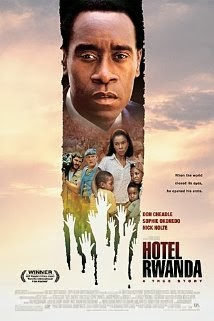
Likewise--and please do not think I'm belittling the topic, simply talking about numbers--there are several films about the Holocaust. Among them are some of my favorite films of all time, and I consider Schindler's List to be a true masterpiece. But there aren't any films at all about the Armenian Genocide. And, aside from Hotel Rwanda, there's little about the Hutu and Tutsi conflict. There's been no film about Darfur, either, or countless other equally atrocious moments in history.

One of the reasons why I'm brining this up is because I used to be a teacher. I tied my unit on the Holocaust to a unit on Darfur specifically because most of my students believed that the Holocaust was a one-time thing. One blip, one moment in history where evil reigned. But that's not true. And ignoring the truth is a huge part of the problem.

Like it or not, our stories--movies, books, songs--influence our reality. After Inglorious Basterds came out, I cannot tell you the number of students who thought it portrayed reality. On the flip side of that coin, consider the number of people who thought Titanic was just a movie, not based on reality at all.

So--while I like the topic of The Monuments Men and plan on seeing it, I also want to see something...different. Something not done over and over and over again.

But it's hard to see that happening any time soon. We are constantly being fed a stream of the typical story. Even when it's something different, it's often framed in a few classic tropes. You can see this in the way we're marketed to--and make no mistake, movie posters are marketing tools. When I do a Google search of simply "movie posters," this is the first page that pops up:


So we have a blue person, two African American men, a bee, a dinosaur, and the rest are white people. Let's ignore the fact that nearly everyone involved in the movies with the blue people, bees, and dinosaurs are white.

Let's also look at setting. We have one movie that takes place on a different planet, one in Scotland, a couple in various locations that move around, and the rest are set in America (with the possible exception of Oblivion, which I've not seen).

I am not saying these movies are bad. Some of my favorite movies are in the posters above. I'm just saying...I'm tired. I'm tired of seeing the same thing over and over and over again.

And it's not just me. As Gizmodo published, lots of movies look, basically, the same.


I'm happy to say that more and more people are seeing this (including myself--I make no claims to have always been an advocate for "different"). When the recent Superman movie was announced in the wake of The Avengers, one of the first cries of protest was: "Why no Wonder Woman? Why no Black Widow?"

A reasonable claim. Here's a list of dozens of superhero movies, all starring a white male superhero. Sure, there are about five that feature female leads, a few with ethnic characters in starring roles (although, typically, as a villain). But there are eleven Batman movies and six Superman movies (with one more currently in production). Wonder Woman--a part of the Justice League and just as popular as Batman and Superman has none. None. Spiderman got a reboot of his entire franchise within a few years, and we haven't had any Wonder Woman movie since ever. Black Widow has an epic past and is an entirely awesome part of the Avengers. And while there are two Thor movies, three Iron Man movies, a few Hulk movies (although not a part of this cast), two Captain America movies (and another in the works), no Hawkeye movies, and no Black Widow movies. So of the Avengers, there are seven movies with the current casts featuring the white boys, and no movies featuring the woman, and no character who's not white.

Let's step away from superheroes for a moment. Let's look at spies--a topic that I really like. James Bond is the epitome of spies. And it shows: there are twenty-three feature films about James Bond. Twenty-three. A fictional character who is the definition of awesome.

And yet...there's also Mata Hari, a real-life person who was way more bad-ass, and she has...wait for it...two films. One in 1931 and one in 1985.

I do not at all want to take away from the movies--and books and other stories--that exist. I like most of the very movies I'm talking about in this post.  It's not about subtraction--I don't want to take them away.

It's about addition. I want more. I demand more. I demand stories that don't take place in America. I demand stories that feature someone other than a white male. I demand stories that show me something I have never seen before, that make me think something I've never thought before, that show me the world is so much bigger than my very, very limited experience.

This week, I'll be featuring authors and readers who feel the same way as I do on this subject. And then throughout the next month, I'll be featuring authors who chose a different setting for their works, who have their eye on developing a story that is, in a word, different.

Further Reading:

Wednesday, February 5, 2014

The Thing That Means the Most...


...has always been my father's pride. This is a commercial for South African scotch, but it hit me right in the feels. The most important reader to me is my father. Reading kissing scenes from YA novels isn't exactly his cup of tea, but I'm so, so, so glad he does it for me. (Found via Mitali Perkins)